The BTS military countdown became its own fandom genre
Seven members, one mandatory service law and about two and a half years of ARMY treating a calendar like a thriller. A look back at the longest intermission in K-pop.
The intermission nobody could skip
Most fandoms survive a break with patience and a few rewatches. BTS fans survived theirs with spreadsheets, countdown widgets and the kind of calendar discipline usually associated with air traffic control. Between December 2022 and June 2025, the members of the biggest group in K-pop completed South Korea's mandatory military service one by one. For a fanbase that had spent nearly a decade being fed albums, variety shows, live streams and world tours, it was the longest intermission imaginable. And, in true ARMY fashion, the intermission became content of its own.
First, the facts, because they matter and because the internet invented enough of them along the way. South Korea requires most able-bodied men to complete military service, typically around eighteen months in the army. A legal change in late 2020 allowed some top entertainers who had received government honours to postpone enlistment until the age of thirty, and BTS had been awarded the Order of Cultural Merit in 2018. Postponing is not the same as being exempt, though, and despite years of debate about whether pop stars who boosted the country's global profile should get special treatment, the members ultimately enlisted.
One by one, then all at once
Jin, the eldest, went first. He enlisted in December 2022 and was discharged in June 2024, returning to a welcome that included a fan event where he hugged around a thousand fans. Somewhere, a public health official quietly reviewed the hand sanitiser budget. J-Hope followed, enlisting in April 2023 and completing his service in October 2024.
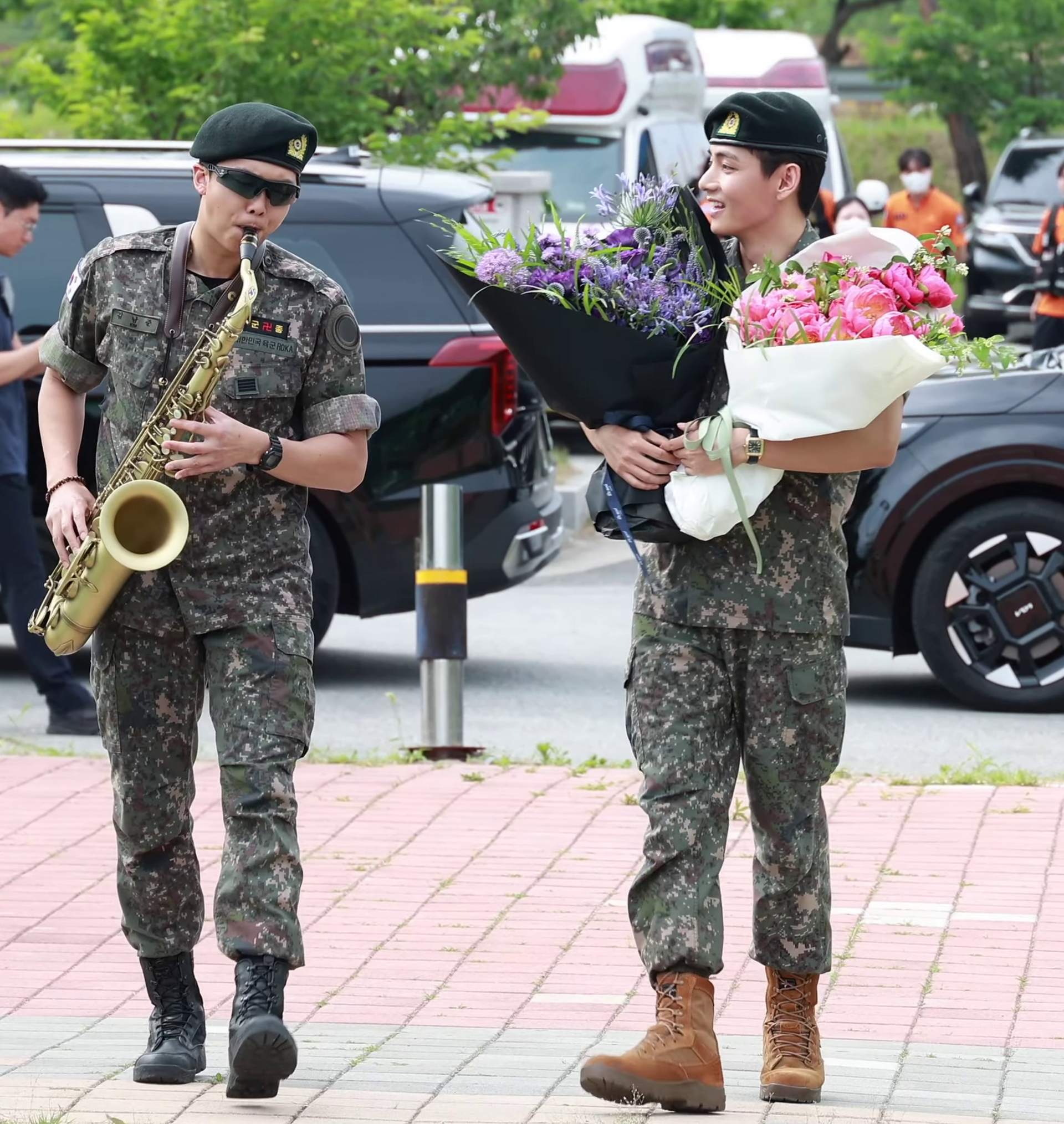
The rest of the group enlisted at the end of 2023. RM and V went in together, and Jimin and Jung Kook used a programme that allowed them to enlist and serve alongside each other, which fans interpreted as either touching friendship or the most efficient buddy-cop setup in history. Suga, because of a shoulder injury, served as a social service worker rather than in active duty. The finish line arrived in June 2025: RM and V on 10 June, Jimin and Jung Kook the following day, and Suga completing his service on 21 June. After roughly two and a half years, all seven were officially civilians again.
The countdown industry
What did fans do in the meantime? Everything. Countdown accounts posted the number of days remaining with the solemnity of a space launch. Fan-made calendars circulated with each member's discharge date circled in a different colour. Every official photo released during service was examined with forensic attention. Is that a new haircut? Is he smiling or is that regulation neutrality? Was that a wave, or simply an arm moving in a military context?
Solo releases scheduled before enlistment helped keep the lights on. Members had recorded music and content in advance, so the fandom had new material to stream while the people who made it were busy doing push-ups. It was a clever bit of planning, and also a reminder that K-pop agencies treat schedule gaps the way most of us treat an empty fridge: with mild panic and advance shopping.
Why the waiting felt so dramatic
A two-year break would barely register in many music careers. Plenty of Western artists disappear between albums for longer than that and come back to find their fans exactly where they left them. K-pop works differently. The industry is built on constant output, frequent comebacks and an intense feedback loop between artists and fans. A group that goes quiet risks being overtaken by the next generation, and there is always a next generation, usually rehearsing in a basement in Seoul as you read this.
That is what made the BTS hiatus a real test. Could a group stay at the top of a fast-moving industry without releasing anything as a group? The answer, judging by streaming numbers, merchandise sales and the scale of every discharge-day celebration, was a resounding yes. If anything, absence made the fandom even more organised. ARMY did not drift away; it simply turned the waiting room into a community centre.
A gentle roast of everyone involved
To the fans who counted down the days to the hour, adjusting for time zones: your dedication is unmatched and your sleep schedule is a crime scene. To the people who claimed military service would end BTS: please return your crystal balls to the shop for a refund. To the agencies who scheduled pre-recorded content to the minute: the Ministry of Defence could learn from your logistics.
And to the members themselves: you went in as the most famous boy band on earth, served alongside regular conscripts and came out to a reception usually reserved for astronauts. No pressure for the reunion, then.
The takeaway
The BTS service era proved something the music industry often forgets: a loyal fandom is not sustained by constant releases alone, but by trust. Fans believed the group would come back, and they built an entire culture around waiting well. The countdown widgets can finally be deleted. Most of them, we suspect, have simply been reset for the next big date.
From the Salty desk
Pop culture, internet chaos, and the details your group chat missed. Served with a little bite.
More from the desk ↗