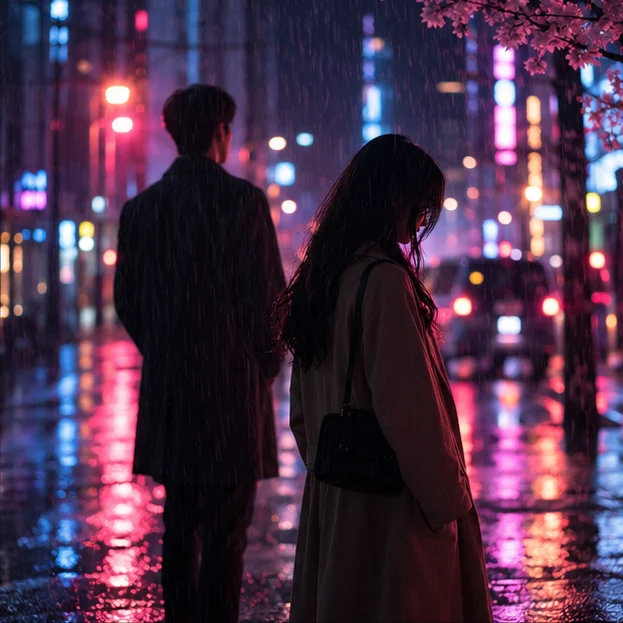
Kim Soo-hyun’s crying scenes remain a national emotional event
Why a convincing K-drama crying scene depends on restraint, context and the acting choices that come before the tears.

The tear is the final sentence
A K-drama close-up can turn one tear into an event. The music softens, the camera moves in and somebody watching at home starts bargaining with their own emotions: surely this is fine, surely they are not about to cry over a fictional person while holding a half-eaten snack. Kim Soo-hyun’s emotional scenes have helped make that response familiar to viewers. The tear is memorable, but it is rarely the whole performance. It is what happens after a scene has spent time building pressure.
Good screen crying is not a contest to produce the largest visible quantity of water. We have taps for that. The acting becomes interesting in the moments when a character tries not to cry, changes the subject or holds a smile for one beat too long. Those choices tell us what the character wants to hide. When emotion finally breaks through, the audience understands more than the immediate sadness. It understands the effort of holding the sadness back.
A close-up needs a story behind it
The camera can make a face enormous, but it cannot supply meaning by itself. The scene must earn the audience’s attention through what happened before: a relationship, a loss, a choice with consequences. Remove that context and the same expression becomes a generic reaction clip. Keep it, and even a small change in breathing can feel substantial. This is why an actor’s quieter decisions often matter more than the moment selected for a dramatic social-media edit.
We should also remember how much television emotion is collaborative. Writing determines what a character cannot say. Direction shapes when the camera stays close. Editing decides how long an audience sits with the feeling. Music can support the scene or arrive with all the subtlety of a parade band announcing that sadness is now compulsory. Acting works within that structure. Praising only the tear risks overlooking the people who made the moment possible.
There is a difference between an earned scene and an engineered one. A show can ask for tears so frequently that the audience begins to recognise the machinery. If every episode needs an emotional emergency, the effect wears thin. The most affecting moments often arrive after a period of ordinary life or humour. Contrast gives grief a shape; constant intensity just leaves viewers exhausted and in need of a glass of water.
Feeling something is allowed
Fandom sometimes turns a scene into an unofficial endurance test: Who cried first, who cried hardest, who rewatched it and immediately suffered again? That can be funny, but nobody needs to prove appreciation with damp tissues. You may admire the performance without crying, or cry for a reason the show did not intend. Stories meet viewers where they are. The comment section does not get to grade the response.
Our take on Kim Soo-hyun’s emotional screen work is to watch the build rather than only the release. Notice what the character avoids saying, how a conversation changes and where the performance leaves room for the audience to understand on its own. Then, if a tear lands, let it land. The national-emotional-event headline is a joke about the collective reaction, not a measurable statistic. What matters is the craft that made a quiet moment feel large without needing every scene to shout.
One more thought
On a rewatch, pause before the obvious emotional peak and notice what the character was doing a minute earlier. Did a sentence become shorter? Did the actor avoid eye contact or hold it too long? Did the scene give another performer room to change the mood? Those choices can reveal more about the character than the tear that becomes the thumbnail. They also make the response feel earned rather than mechanically summoned. A strong crying scene is not proof that more suffering automatically makes better television. Sometimes a show needs to let its characters experience ordinary joy so grief has a real contrast. If every shot asks you to cry, eventually you may just ask the streaming service for a glass of water. Kim Soo-hyun’s emotional appeal is best discussed through the work around the tears, not by counting them as though the drama were being scored by a very damp accountant.
From the Salty desk
Pop culture, internet chaos, and the details your group chat missed. Served with a little bite.
More from the desk ↗