A teaser trailer should not require a full-time investigation
A minute of footage now produces theories, diagrams and twelve confident explanations of a film nobody has seen.
One minute of footage, forty hours of homework
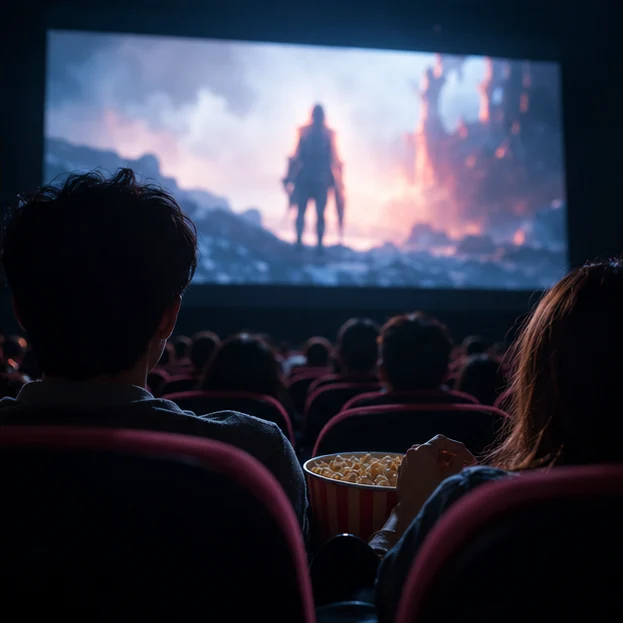
A teaser trailer drops. It has a dramatic silhouette, a familiar sound and one shot of a door opening. Before the credits have finished loading, somebody has enlarged the doorknob, mapped the shadows and announced that the entire plot is obvious. Three channels publish “ending explained” videos for a film that has not yet opened. A social account circles a blurry face in red. The rest of us wanted to watch a minute of cinema and then make lunch. Apparently we are now behind on the syllabus.
Theorising can be fun. It is part of the pleasure of shared anticipation, especially when a franchise has taught audiences to notice visual clues. A good trailer invites questions and gives friends something to argue about harmlessly. The trouble starts when every frame must carry a secret and every uncertainty is treated as a puzzle the studio has promised to solve. Trailers are advertisements. Their job is to introduce a mood, an idea and a release date. They are not required to function as a fully indexed deposit of the screenplay.
The zoom button is not a source
A visual detail can mean many things. A costume may suggest a relationship; it may also have been selected because it looked good under that particular light. An actor glimpsed near the edge of a shot may be important, or the editor may simply have needed a better transition. Production stills and teaser footage are arranged to produce interest, not to give us a neutral record of the finished film. Cropping, colour grading and sound can make an ordinary moment look like a revelation. That is filmmaking, not a breach of a secret contract with internet detectives.
There is also a practical problem with certainty. The more confidently we announce a theory as fact, the harder it becomes to enjoy a different story. Viewers can arrive at the cinema carrying a private checklist of cameos, twists and symbolic objects. If the film offers something else, disappointment can appear before we have even decided whether the thing on screen works. We have accidentally reviewed the movie we imagined instead of the movie somebody made. That seems unfair to everyone, including the audience member who spent the ticket money.
Marketing loves the extra labour
Of course, the industry benefits from the frame-by-frame economy. A teaser that launches a thousand conversations has done its promotional job many times over. Every theory video, reaction clip and “what you missed” thread extends its life. The fan community supplies analysis, artwork and excitement for free, while the official account can remain mysteriously quiet. That exchange is not automatically bad. Fans build culture around stories because they care. It becomes tiring when participation starts to feel mandatory, as though you need a research folder to qualify for opening night.
The smartest marketing understands restraint. A strong image can create curiosity without demanding a scavenger hunt. A line of dialogue can reveal character without pretending to reveal destiny. A trailer can leave us with a question that matters emotionally rather than a spreadsheet problem. Sometimes the most promising sign is not a hidden symbol but a clear sense of tone: funny, frightening, tender or gloriously strange. We can respond to that as viewers, not as unpaid continuity supervisors.
Keep the mystery alive
Here is permission nobody requested but many of us need: you can watch a teaser once and stop. You can say “that looks good” without producing a theory. You can ignore the thumbnail that insists the final scene has already been decoded. You can let the film contain information you do not possess yet. Surprise is one of the reasons to go. Protecting a little of it is not a failure of fandom; it might be the most enthusiastic thing you can do.
If you enjoy the detective work, enjoy it with room for doubt. Label a guess as a guess. Credit official announcements for confirmed details and treat anonymous claims with the caution they deserve. Remember that a trailer may change shape before release and that a gorgeous shot is not a guarantee of a satisfying story. Then turn off the zoom tool, make the lunch you abandoned and let the cinema have its moment. The doorknob will still be there when the film opens. It may even turn out to be just a doorknob.
From the Salty desk
Pop culture, internet chaos, and the details your group chat missed. Served with a little bite.
More from the desk ↗