Jawan: Shah Rukh Khan, spectacle and the promise of a mass entertainer
Atlee’s Jawan pairs Shah Rukh Khan’s star power with a story framed around injustice and a very large cinematic canvas.
The entrance is part of the language
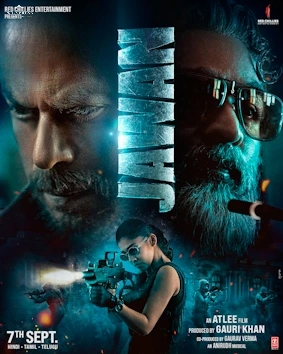
A mass entertainer does not ask its star to enter a room quietly and locate a chair. It builds a moment around arrival: music, framing, movement and the audience’s anticipation all meet in the same few seconds. Jawan, directed by Atlee and starring Shah Rukh Khan, belongs to that tradition. Red Chillies Entertainment describes it as an action thriller about a man seeking to correct wrongs in society. That premise gives the spectacle a moral direction, while the star image gives it immediate public energy.
The formula can look simple from a distance. A hero confronts injustice, the camera loves him and the score remembers to inform everyone that a hero is present. But making that formula work requires rhythm. An entrance needs a reason to matter. A confrontation needs stakes beyond a beautifully photographed punch. A speech needs to connect with the story rather than sounding like a message that wandered in from a campaign poster.
Scale needs a human anchor
Action can be thrilling in its own right, but social stakes ask an audience to care about people rather than only the next set piece. A story about correcting wrongs has to make those wrongs legible. Who is affected? What does the hero risk? Does the film give other characters room to act, or do they exist mainly to confirm that the star is impressive? Those questions matter even when the film is operating at a scale where subtlety has quite reasonably left for lunch.
Jawan’s cast includes Nayanthara and Vijay Sethupathi alongside Khan, with Deepika Padukone in a special appearance, according to the production company. A strong ensemble can give a star vehicle friction and perspective. The hero’s force becomes more interesting when another performer can challenge, complicate or resist it. An antagonist should do more than wait for the final fight; supporting characters should have reasons to matter before the music tells us they do.
There is also a specific pleasure in watching Khan work within a large popular-cinema format. His screen presence can carry humour, anger and warmth in quick succession. The challenge for a film built around him is to use that range instead of repeating a single triumphant pose until the audience begins to suspect the camera has become stuck. Star power is a resource. Like any resource, it can be used thoughtfully or poured over every scene until nothing else is visible.
What the spectacle promises
Mass cinema is often judged as though it has to choose between entertainment and ideas. That is a false choice. A big, loud film can invite viewers to think about power, institutions and responsibility while delivering the physical rush they came for. The questions are whether the story makes those ideas specific and whether the action grows from them. If a social issue appears only to justify another slow-motion sequence, the film is leaving potential on the table.
This is a film analysis, not a scored review from a screening. We have removed the original demo rating and verdict rather than pretend the Salty desk watched and graded a cut. What makes Jawan worth discussing here is the way its official premise combines rectifying injustice with the machinery of star-led spectacle. The best version of that combination can move an audience and give it something to argue about on the way home. The weakest would merely turn the volume up. The difference is where a genuine review would begin.
One more thought
When you do watch Jawan, pay attention to the moments between the big entrances. Does a smaller scene make the next action sequence matter more? Do the supporting performers receive their own choices, or are they only there to deliver information to the hero? Does the social concern stay present after the first speech? These are the questions that separate a full review from a reaction to a trailer. Atlee’s filmmaking and Khan’s star image create a promise of scale, but the final judgment has to be earned by the complete film. Our earlier demo score could not do that job, so it is gone. We can still discuss the official premise and why the mass-entertainer form is suited to stories about anger and justice. The roar of an entrance is a start. What the film does after the applause is the real test.
Film facts: official film page.
From the Salty desk
Pop culture, internet chaos, and the details your group chat missed. Served with a little bite.
More from the desk ↗